Skip links

History of Harness Racing in Modena

A show that has been running for 150 years

England

The first races were established towards the end of the 12th century, with horses imported from the East. After careful selection, these horses gave rise to the English thoroughbred breed. Towards the end of the 18th century, the first steeplechase and gallop races were imported to the continent, with all their components, including bookmakers and betting.

There was not a single English town that did not become passionate about this sport. Thus, the first racecourses were built in York, Newcastle, Liverpool, and Newmarket. The last one was the scene of the most exciting races, with the largest bets. It is remembered that a winning horse in 1775 won something like 300,000 italian lire.

By 1773, 19 races with prizes of over 100 guineas had already been established in England. The phenomenon of the harness races began to spread rapidly in Ireland from that period onwards.

Translated with DeepL.com (free version)

ITALY

Who established the first horse races in Italy was company from Piemonte that began operating between 1844 and 1846. In Milan, the first horse races took place in 1872 at the Arena. In Senago, a company from Lombardia, organized gallop races in 1857. The company from Piemonte directed its objectives towards Alessandria, Asti, Olbia, and Vercelli. Meanwhile, new companies were also springing up in other parts of Italy.

In 1852 Pisa and then Naples. In the absence of real sports clubs, horse races during this period were organized by private groups. Finally, however, the “Società Nazionale” (National Society) was founded, which in 1862 obtained 50,000 italian lire in aid from the government by decree of the Minister. This society then gave rise to the Associazione Ippica Nazionale (National Horse Racing Association), which quickly dissolved. In 1871, a group of gentlemen from the aristocracy from Lombardia founded the new society from Lombardia, establishing the “Società Ippica Varesina” (Varese Horse Racing Society).

In 1881, with the birth of the Italian Jockey Club, all these societies were absorbed into a single body for the organization of horses.

FRANCE

In 1776, the first races were held on the Leblans plain, before moving to Vincennes near Paris for a period.

The races held in 1872 in Fontainebleau were famous, because horses from the highest echelons of French society took part and fabulous prizes by the standards of the time were offered. Some contemporary accounts describe it as the most luxurious event ever seen. However, it was Napoleon who officially established horse racing in France. Between one battle and another, the brilliant leader would gather his troops by organizing horse races.

In 1805, he officially introduced them in France. After London, Paris became the center of international horse racing, a position that grew stronger in the years that followed.

SOCIETA’ MODENESEPER ESPOSIZIONI FIERE E CORSE DI CAVALLI

COMPANY FOUNDERS:

Alfonso Bellettini
Antonio Capri
Leopoldo Vaccari
Giuseppe Zoboli


Ippodromo Ghirlandina ospita il Convegno delle Categorie Ippiche sulle scommesse

The Ghirlandina Racecourse Hosts the Horse Racing Industry Conference on the Betting Sector

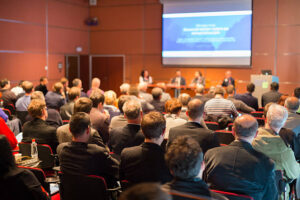
On November 30, the Modena Racecourse hosted a significant conference focusing on the reform of the horse racing betting sector. The event, titled “Reclaiming Management of Horse Racing Betting: The Only Hope for Revitalizing the Industry,” brought together representatives from the trotting and galloping sectors to sign a joint document to be submitted to the Ministry of Economy and Finance (MEF).

Read More »

The Glorious Società Modenese per Esposizioni Fiere e Corse di Cavalliwas founded in February 1875. Even before its inception and consequently the new racetrack, from 1856 to 1867, the annual races in Modena were held on the city walls, then from 1868 on the parade ground. The four horse enthusiasts from Modena who founded the Modenese Society were Alfonso Bellettini, Antonio Capri, Leopoldo Vaccari, and Giuseppe Zoboli.

Just one year after the association was established, in 1876, the first trotting races were held at the racecourse in Modena, along with the first Horse Fair. In 1880, the Fiere e Corse company, headed by its first president, Giuseppe Tampellini, raised its banner with a yellow and blue ribbon, the colors of Modena. The city’s nobility participated intensely in these horse racing events. In 1893, the Pariglie race was held for the first time, with Olrack and Grecuzzo winning. In 1889, the Totalizator came into operation, with bets of 2,200 lire. There was a lot of enthusiasm alongside the races, and in the stables of the Foro Boario, numerous beautiful horses were exhibited, attracting the interest of the entire population.

In 1915, thanks to the efforts of Pier Luigi San Donnino, the municipal administration allocated 52,000 italian lire to widen the track and build permanent grandstands. The Princes of Savoy and other high-ranking authorities enthusiastically attended the inauguration. To ensure the smooth running of the races, six stands were placed around the track (200 meters apart), each with two judges who noted any injuries to the horses. The president of Modense Cav. Tito Giovanardi later succeeded in bringing the European Championship to Modena. In 1925, the company celebrated 50 years of racing under the patronage of Benito Mussolini.

The main attraction was the Modena International Grand Prix, with a prize of 120,000 italian lire. Thanks also to the names of Ettore Barbetta and Nello Branchini, Modena rose to prominence in national trotting. In 1931, Dr. Cacciari won the G.P. Allevamento with Etrusco, owned by Count Orsi Mangelli, while Nello Branchini won the G.P. Internazionale Ghirlanda with Jassemine.
From the first modest events in 1876, the races had achieved remarkable success. The prize money had risen from 3,000 lire to 160,000 lire in those years. Società Modenese per Esposizioni Fiere e Corse di Cavalli carved its name in history as the glorious organization to which a significant part of Modena’s events in this century are linked.


Old Modena Living room

A hundred years of events at the old racecourse.
A passion for horses and a wealth of encounters and friendships have made the Foro Boario a place dear to the hearts of Modena’s residents.
Now it is moving to another location, with a touch of nostalgia.

Are we really sure that customs, traditions, and habits change radically in a hundred years?

(Mario Morselli’s article, written on the occasion of the centenary)

Social and political conditions change, it is true, but certain fundamental values in human life remain unchanged. This is especially true for civic events that express popular consensus. Trotting races, which have changed very little from their original form, must be considered in this context. In fact, they express not only interest in an activity that has preserved its forms and relationships intact in all its structures, but also solid guarantees of protection for trotting horse breeding, as well as economic and tourist value.

In this historical-philosophical analysis, the Modena Racetrack, with its 100 years of history, finds its best verification. We know of its somewhat troubled origins in 1872. In Modena, the decision to build the racecourse was made two years after Rome was proclaimed the capital. For the people of Modena, this was also a historic event, decided upon with an act of generosity that still gives pause for thought today. The racecourse was located between two buildings from the Estense period: the citadella built in 1635 by decision of Francesco I and the Forum Boarium commissioned by Francesco IV, begun on a design by Vandelli in 1834 and completed five years later. The mention of the Forum Boarium is not accidental, as it is linked to the origins of the cattle and horse fair. The hundred years of history of the racecourse were therefore directly guaranteed by a perfect partnership between the Horse Racing Society (Società Ippica), later Società Modenese per Esposizioni Fiere e Corse di Cavalli, Municipality and Military Authority.

Cacciari’s fame was cemented in the 1948 Ghirlanda when Tais Toi’s sulky beat the great Mistero in record time. Carlo Cacciari and his 1,000 victories remain an indelible testament to the level achieved by the Modena stables and the class of their drivers.

The racecourse subsequently took on the appearance of a permanent facility, allowing horses to be trained there all year round. The rooms below the stands were reserved for gambling, and were later completed with the construction of additional counters, connecting the two buildings with a single projecting roof.


Alongside the races, again on the initiative of the Modena Society, the National Horse Shows were held, and we can still see Rag. Renzo Ghittoni, secretary of the Society, in his role as director, a man who had rare skills, knowledge, and experience in organizing races.
During the Second World War, the aerial bombardments of Bologna led to the transfer of the meetings to Modena, which hosted 23 days of racing between December 1943 and April 30, 1944. This intense activity continued even after the first air raid on Modena in February 1944. The racecourse stands, like other facilities in the area, were destroyed (it is estimated that over 100 high-explosive bombs were dropped on this area). The stables also suffered the same fate and some foals fell victim to the fury of war.

As we have already mentioned, the Piazza D’Armi Racecourse was a center for the breeding and training of trotting horses, and it is enough to mention that Modena had famous stables such as those of Baron Ruggero, Vaccari, Gustavo Modena, Baron Franchetti, the Boni brothers, Lady Hambletonia, Giuseppe Branchini, then his son Nello and Fausto, Cav. Barbetta, Piccinini, and Dr. Cacciari.

With the expansion of activities at major racetracks, including Modena, thanks to the faith in trotting of its passionate managers, it adapted to the new commitments with increased funding and the presence of great Italian and foreign champions. Certainly, the two famous Italian trotters, the legendary Tornese and Crevalcore, the fabulous Gallinotte, the great Americans, and even the reigning Italian champion Carosio, to name but a few of the great protagonists at Piazza d’Armi, confirmed that Modena could retain its prestige as an important center for Italian horse racing. And there was no shortage of prestigious awards.